
Loading…
Learning today is about much more than reading textbooks and preparing for exams. Students are learning through digital platforms, professionals are developing new skills, and people at every stage of life are looking for better ways to understand information and turn knowledge into something useful.
Studyxcel.com brings this wider idea of learning into one place. The focus is on practical educational information, smarter study habits, useful skills, career development, digital learning and ideas that can help readers make meaningful progress.
Whether you are preparing for an important exam, improving your study routine, exploring a career path or learning something completely new, the right information can make the process clearer and more manageable.
A good learning platform should do more than provide information. It should help readers understand what they are learning, discover practical ways to use it and develop habits that support long-term progress.
Studyxcel.com is designed around this approach. Instead of limiting learning to one subject or one type of learner, it covers different areas that can support students, graduates, professionals and lifelong learners.
The learning journey can involve many different goals:
- Understanding difficult academic topics
- Preparing for examinations
- Improving study habits
- Developing useful personal and professional skills
- Exploring online learning opportunities
- Planning future education
- Understanding career possibilities
- Improving productivity and time management
- Using modern digital tools responsibly
The idea is simple: learning should be useful, understandable and connected to real goals.
Information is everywhere. A quick search can produce thousands of results, but finding information is not the same as learning.
Effective learning requires focus, understanding and practice. Learners need to know which information matters, how to organise it and how to apply it after studying.
A smarter approach can start with a few simple habits:
- Set a clear learning goal before starting
- Break complicated subjects into smaller sections
- Focus on understanding rather than memorising everything
- Use practice to test your knowledge
- Review difficult topics regularly
- Take notes in a way that makes sense to you
- Track progress instead of simply counting study hours
This approach can make learning more purposeful. Instead of asking how long you studied, ask what you can understand, explain or apply after the study session.
Every learner has different needs. A school student may need revision help, while a university student may be researching future opportunities. Someone entering the job market may want career guidance, while an experienced professional may be looking to develop new skills.
That is why useful educational resources should cover more than traditional study material.
Studyxcel.com can explore areas such as:
- Study guides and learning resources
- Study techniques
- Exam preparation
- Revision strategies
- Online learning
- Student productivity
- Career development
- Skill development
- Higher education
- Scholarships
- Professional development
- Interview preparation
- Digital education
- Modern learning technologies
The purpose is not simply to provide more information. It is to make useful information easier to understand and apply.
Spending more hours studying does not always produce better results. The way a learner studies can make a major difference.
Passive reading can feel productive because it takes time, but active learning often requires more involvement. Explaining a concept in your own words, answering questions without looking at notes and practising problems can reveal what you actually understand.
Useful study techniques include:
- Active recall
- Spaced revision
- Practice questions
- Short focused study sessions
- Personalised note-taking
- Topic-based revision
- Self-testing
- Explaining concepts in simple language
- Reviewing mistakes
A strong study routine should also be realistic. A complicated schedule that lasts only a few days is less useful than a simple routine that can be maintained consistently.
Exams become much more manageable when preparation begins early. Leaving an entire syllabus until the final days can create unnecessary pressure and make it harder to identify weak areas.
A better approach is to divide preparation into smaller stages. Start by understanding what needs to be covered, then create a realistic schedule and gradually increase practice as the examination approaches.
A practical exam preparation plan can include:
- Reviewing the complete syllabus
- Dividing subjects into manageable topics
- Identifying strong and weak areas
- Creating a revision timetable
- Practising questions regularly
- Reviewing incorrect answers
- Using timed practice when appropriate
- Revisiting difficult topics
- Keeping final revision focused
Preparation should not only be about remembering information. It should also help you understand how to use that information when answering questions.
Education becomes even more valuable when knowledge can be used in practical situations. Academic qualifications can provide an important foundation, but students and professionals can also benefit from developing transferable skills.
Useful skills can include:
- Communication
- Writing
- Research
- Critical thinking
- Problem-solving
- Digital literacy
- Time management
- Teamwork
- Presentation
- Organisation
- Creativity
- Adaptability
These abilities can support both academic and professional development. They can help learners communicate ideas clearly, solve problems more effectively and adapt when expectations change.
Image placement: Place your realistic image for “Build Skills Beyond the Classroom” directly below this heading or after the first paragraph.
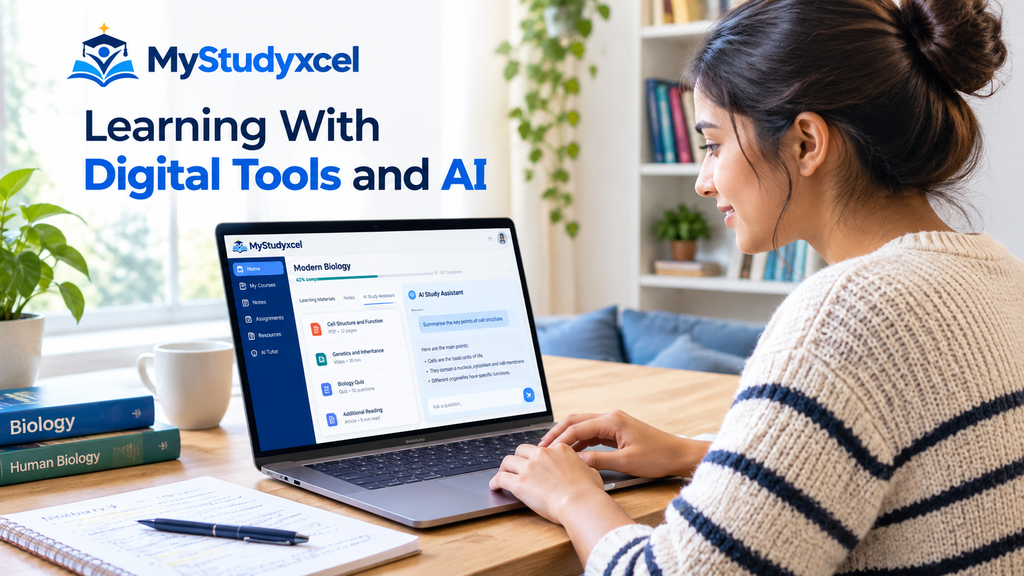
Digital technology has changed the way people learn. Online resources, educational platforms, productivity applications and artificial intelligence tools can give learners additional ways to research, practise and organise information.
AI can be useful when it supports the learning process rather than replacing it. For example, a learner can use an AI tool to request a simpler explanation of a difficult concept, generate practice questions, organise ideas or explore different ways of approaching a problem.
However, digital tools work best when learners remain actively involved. Information produced by AI should be checked when accuracy matters, and students should continue developing their own understanding rather than simply copying generated answers.
Useful applications of digital learning tools include:
- Simplifying difficult concepts
- Creating revision questions
- Organising study notes
- Brainstorming ideas
- Practising communication
- Planning learning schedules
- Exploring unfamiliar subjects
- Improving productivity
- Comparing different explanations
- Supporting independent research
The future of education is not simply about replacing traditional learning with technology. Books, teachers, practical experience, online resources and digital tools can all work together. The most important part remains the learner’s ability to understand, question, practise and apply knowledge.
Image placement: Place your AI/digital-learning image here, directly under “Learning With Digital Tools and AI”.
Online learning has made education more flexible. People can now access courses, tutorials, educational articles and digital resources from many different locations.
But having access to more resources can also create information overload. Learners can easily save dozens of courses and articles without completing any of them.
A better approach is to start with one clear objective. Decide what you want to learn, choose resources that match that goal and give yourself enough time to practise.
A useful online learning process is:
- Choose one specific learning objective
- Find reliable learning resources
- Follow a manageable schedule
- Take notes while learning
- Practise the new knowledge
- Create something using the skill
- Review your progress
- Move to a new topic when the foundation is strong
This turns online learning from endless content consumption into a more focused learning experience.
Education and career development are closely connected. Students often begin thinking about careers before they fully understand what different professional paths involve. Graduates may need to strengthen practical skills, while professionals may need to continue learning as industries evolve.
Career development can involve much more than choosing a job title. It can include understanding personal strengths, researching opportunities, developing useful skills and learning how to communicate professionally.
Important areas can include:
- Career exploration
- Skill development
- CV preparation
- Interview preparation
- Professional communication
- Workplace skills
- Networking knowledge
- Continuing education
- Career planning
Learning becomes more meaningful when it helps people prepare for what they want to do next.
Choosing the right educational path can involve many questions. Students may compare courses, institutions, qualifications and future career possibilities before making a decision.
Higher education is not only about selecting a programme. Learners may also need to understand admission requirements, funding opportunities, scholarships, academic expectations and the skills associated with different fields.
When researching educational opportunities, it can help to consider:
- Course content
- Entry requirements
- Duration of study
- Potential career paths
- Costs and available funding
- Scholarship opportunities
- Location and learning format
- Skills gained during the programme
Making decisions based on clear information can help learners understand their options before committing to a particular path.
Learning becomes difficult when everything is left until the last minute. Good time management can help students and professionals create space for focused work without making every day feel overwhelming.
Productivity does not mean filling every minute with tasks. It means identifying important work and giving it enough attention.
Simple habits can include:
- Set three important priorities each day
- Schedule dedicated learning time
- Break large tasks into smaller steps
- Keep deadlines organised
- Reduce distractions during focused work
- Avoid unnecessary multitasking
- Take planned breaks
- Review unfinished work regularly
A practical routine should fit your real life. The best productivity system is one that you can actually maintain.
Learning does not stop at one stage of life. The needs of a high-school student can be very different from those of a university graduate or working professional, but each can benefit from useful educational information.
For Students
Students can explore study techniques, exam preparation, revision strategies, productivity ideas and educational resources that support everyday learning.
For University Learners
University students can focus on academic development while also exploring career preparation, professional skills, digital learning and future opportunities.
For Graduates and Job Seekers
Graduates can continue developing practical skills, researching career options and improving their professional preparation.
For Working Professionals
Professionals can use continuous learning to strengthen existing skills, explore new areas and adapt to changes in their industries.
For Lifelong Learners
Anyone with curiosity can continue learning. New subjects, technologies, skills and ideas can create opportunities for personal and professional development at almost any stage of life.
Reading an article or completing a lesson is only one part of learning. The real value appears when knowledge changes what you can understand or do.
After studying something new, ask yourself:
- Can I explain this in my own words?
- Can I answer questions about it without checking my notes?
- Can I apply it to a real situation?
- What part do I still find difficult?
- What should I practise next?
These questions encourage active learning. They also make progress easier to recognise because you are measuring understanding rather than simply measuring time.
Modern learners have access to an enormous amount of information. The challenge is turning that information into knowledge and useful skills.
Studyxcel.com focuses on that journey: helping readers explore educational topics while thinking about how knowledge can be understood, practised and applied.
The learning process can move from:
- Information to understanding
- Understanding to practice
- Practice to skill
- Skill to application
- Application to continuous improvement
That is what makes learning more than simply collecting information.
Education continues to change as technology, artificial intelligence, online learning and professional expectations evolve. Learners who remain curious and adaptable can continue developing long after formal education ends.
The future of learning will likely combine traditional educational methods with digital resources and new technologies. The tools may change, but the fundamentals remain important: curiosity, practice, critical thinking, consistency and the ability to apply knowledge.
Studyxcel.com is built around this broader view of education. Whether someone is preparing for an exam, developing a professional skill, researching a career or learning something simply out of curiosity, every useful learning experience can become part of a larger journey.
You do not need to learn everything at once.
Choose one topic. Set one realistic goal. Find useful information. Study it carefully. Practise what you learn. Then take the next step.
Small improvements can eventually create significant progress.
Studyxcel.com is for learners who want to keep moving forward—through better study habits, stronger skills, practical knowledge and continuous learning.